What to Check before Ordering Structural Steel Pipe from a Supplier
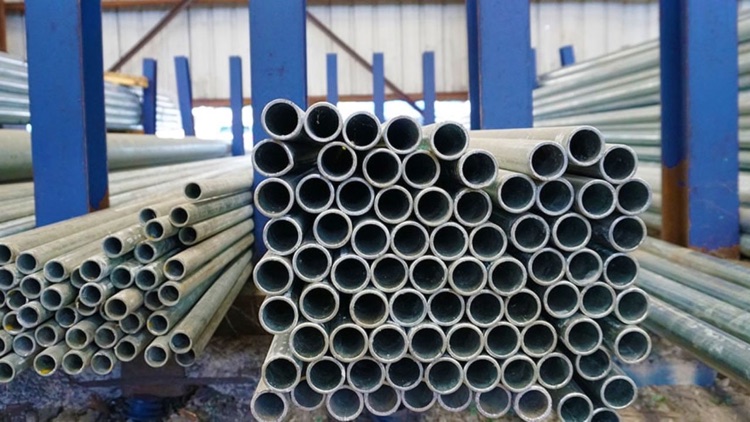
The buyer has to be clear about what he or she needs in the project, and then the structural steel pipe is ordered. This involves the nature of the structure, load-bearing requirements, and the usage of the pipe in the interior or exterior. Structural pipes are not generic, and this means that the incorrect type of pipes may lead to a safety hazard or unnecessary expenditure. A large number of projects do not finish on time due to the lack of a proper definition of the requirements at the beginning. Once the application is evident, it will be easier to select the appropriate size, grade, and coating. This measure will prevent confusion between the supplier and buyer and will guarantee that the pipe from the structural pipe supplier will work well under actual conditions of work.
Evaluating Wall Thickness and Size Accuracy
Strength and durability directly depend on the wall thickness and pipe size. A heavier wall typically offers increased load carrying capacity, but also added weight and cost. Conversely, a leaner wall can be less expensive but can also pose safety hazards if it is not well designed. Outer diameter, wall thickness, and length should be as per the project drawings. Minor differences can make installation in the field problematic. A supplier with whom one can do business must offer the same dimensional tolerance in each batch. Customers must always demand elaborate size charts and verify measurements prior to the commencement of production.
Understanding Manufacturing Method
The manufacturing process of structural steel pipe has a significant impact on cost and quality. The most popular is the ERW (Electric Resistance Welded), which is very popular among the construction and structural systems because it is cost-effective and performs well. Seamless pipes are much stronger; however, they tend to be more costly and are not always needed in normal structural applications. Large diameter or heavy-duty applications are done with LSAW pipes. The buyer is supposed to choose the manufacturing process according to the needs of the project and not just the price. Selecting the appropriate process assists in balancing performance, safety, and budget.
Reviewing Supplier Quality Control System
A good supplier is indicated by a good quality control system. The buyer is to examine the availability of the appropriate inspection equipment and testing of the supplier. Dimensional inspection, weld seam testing, and coating thickness measurements are important tests. Batch consistency is also of great importance to big projects. The suppliers that are certified by ISO or API tend to have more stringent quality standards. In case of poor quality control, there is a high probability of getting faulty or irregular pipes. Hence, inspecting the supplier’s QC system will minimize the risks on the project.
Checking Production Capacity and Delivery Time
Very important factors that are usually neglected are production capacity and delivery time. Big projects need the supply on time so as not to delay the construction process. The buyer ought to verify that the supplier is able to cope with the required volume within the deadline. We should also have to examine whether the supplier is sufficiently stocked or requires complete production cycles. Delays in the delivery of steel pipes would impact the overall project schedule and escalate the cost of labor. Before a supplier can be certain, a well-defined production plan and a real-world delivery schedule must be presented before they can confirm the order.
Comparing Price with Overall Value
Price should not be the only factor when choosing a supplier. The lowest price can be of inferior quality, non-uniform dimensions, or incoherent coating. Rather, the consumer ought to look at total value, such as quality, service, delivery, and technical support. A price that is a bit more expensive from a trusted supplier can minimize maintenance and replacement expenses in the long-term. Savings in the short term have less significance in structural projects than safety and durability. Hence, it is useful in determining the overall value to make a wiser buying choice.
Conclusion
Purchasing structural steel pipe is not a mere purchasing process but a technical one, which has an impact on safety, performance, and the overall project cost. The specifics, such as the material grade and wall thickness, the quality of the coating, and the reliability of the supplier, are significant in the overall performance of the final structure in real-life circumstances. Delaying buyers by checking standards, production processes, and quality control mechanisms will minimize the chances of failures and delays. It is also done through careful selection to prevent overpaying on unnecessary specifications. Finally, selecting the appropriate supplier and verifying all the essential information before placing an order will provide a more robust, secure, and cost-efficient project result.